Political Editorial | Uttar Pradesh – 2027 Election Preparations
In politics, making promises to people is nothing new. Delivering speeches from podiums, organising massive public rallies and communicating through social media are all familiar political practices. But creating a platform where citizens can directly share their concerns with a political leader and receive a personal response represents a different approach to political communication.
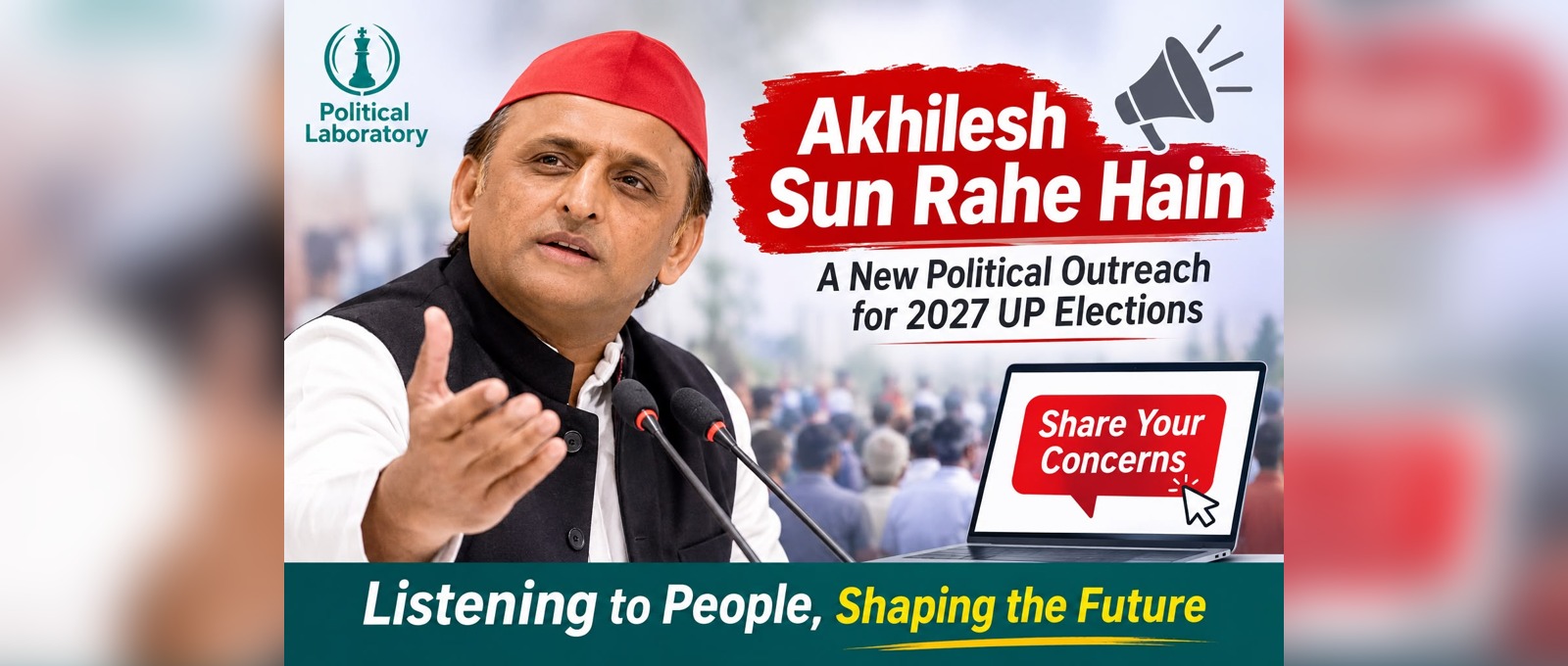
The “Akhilesh Sun Rahe Hain” initiative launched by Samajwadi Party chief Akhilesh Yadav is an interesting political experiment in this context.
While the initiative may appear to be a digital outreach platform, it reflects a broader political effort to establish a direct connection with people ahead of the 2027 Uttar Pradesh Assembly elections.
From public concerns to political agenda
Through the Akhilesh Sun Rahe Hain website, citizens can directly share their concerns, opinions and suggestions with Akhilesh Yadav on issues such as employment, education, examinations, recruitment, agriculture, healthcare, women's safety, startups and technology.
According to a PTI report, the initiative reportedly received around 1,500 messages within its first 48 hours. A significant share of responses came from young people below the age of 35, with employment, education, examinations and recruitment-related concerns emerging prominently.
The interesting aspect of this initiative is not merely collecting grievances. It reportedly seeks to provide individual responses and explain how the party would approach or address these concerns if it were to form a government.
For instance, if a woman raises concerns about unsafe public transportation for commuting to work, the conversation could extend beyond road infrastructure to public transport routes, last-mile connectivity and women's safety. Similarly, if a young person highlights the difficulty of securing employment without prior experience, the discussion could focus on apprenticeships, skill development and industrial opportunities.
This approach attempts to connect individual concerns with broader policy discussions.
Not just a campaign, but a new approach to political data
In contemporary politics, data is no longer limited to voter numbers or electoral statistics. It is also about understanding what people are concerned about, where dissatisfaction is emerging, which issues dominate urban and rural conversations, and what young people expect from their future.
Traditional surveys typically collect responses to predetermined questions. An open digital platform, however, allows people to articulate their concerns in their own words and identify the issues they consider important.
This can potentially offer political parties a richer understanding of public sentiment and emerging concerns.
However, the real value of such a platform lies in how responsibly this information is analysed, how privacy is protected, and whether the insights are translated into meaningful policy discussions.
Treating young people as participants, not just voters
Young people are likely to play a significant role in Uttar Pradesh's political landscape. Employment, competitive examinations, government recruitment, education and economic opportunities remain important issues shaping political conversations among younger voters.
Instead of merely offering promises during election season, providing young people with a platform to articulate their concerns represents a different style of political engagement.
“You don't have to agree with me to be heard.”
That sentiment carries political significance as well. A platform that allows citizens to express themselves regardless of whether they agree with the leader could widen the scope of democratic engagement.
By attempting to connect people directly with the leadership, the initiative also seeks to move beyond the conventional communication chain involving party workers, local leaders and intermediaries.
Will the experiment succeed?
The initial response is encouraging, but the number of messages received by a digital platform alone cannot determine its political success.
The responses must be meaningful. Public concerns must find a place in the party's policy discussions. Proposed solutions should be realistic. And, most importantly, people should be able to track whether the concerns they raised have been acknowledged and acted upon.
If the initiative develops into a sustained process of listening, responding and following up, it could evolve from a campaign tool into a broader public-engagement mechanism.
A new idea in political communication
Through Akhilesh Sun Rahe Hain, Akhilesh Yadav is attempting to communicate a simple but politically significant message: listen to people, acknowledge their concerns, respond to them and connect those concerns with future policy priorities.
At a time when political communication is increasingly dominated by speeches, slogans, digital campaigns and carefully curated narratives, understanding what people want to communicate to their leaders may become just as important as what leaders communicate to the public.
Will “Akhilesh Sun Rahe Hain” remain a political slogan, or evolve into a system that shapes policy through public feedback? That is the real test the initiative faces ahead of the 2027 Uttar Pradesh Assembly elections.